Country status

Current practices in resource management, farming and hatchery utilisation of Artemia cysts and biomass.

Copyright, all rights reserved.

In this collection
WAS 2026 Artemia Session presentations

An Artemia Session was held on 5 June at the World Aquaculture 2026 conference in Singapore. The session was facilitated by the International Artemia Aquaculture Consortium and covered the outcome of the World Bank PROBLUE Artemia Study Accelerating Brine Shrimp Artemia Aquaculture Production and Conservation for a Resilient Blue Economy.

The session featured case studies from China, Bangladesh, Thailand, Uzbekistan, Iran and Kenya. Presentations (PPTs and videos) from the session are available for download, and video presentations are available for viewing online. The session was chaired by Yeong Yik Sung and Patrick Sorgeloos.

Tapping into the global Artemia network: The International Artemia Aquaculture Consortium

Presentation by Yeong Yik Sung, Sui Liying & Patrick Sorgeloos at the Artemia Session held at the World Aquaculture 2026 conference in Singapore on 5 June 2026.

Status of Artemia cyst harvesting by ARSAL company in Siberia

Presentation by Galina Tsareva at the Artemia Session held at the World Aquaculture 2026 conference in Singapore on 5 June 2026.

Successful use of umbrella Artemia in commercial hatcheries of mud crab and shrimp in the Mekong Delta, Vietnam

Presentation by VN Ut, LT Nguyen, Patrick Sorgeloos and NV Hoa at the Artemia Session held at the World Aquaculture 2026 conference in Singapore on 5 June 2026.

Status of Artemia production in the artisanal saltworks in the Mekong delta, Vietnam

Presentation by VN Ut, LV Thong, Patrick Sorgeloos and NV Hoa at the Artemia Session held at the World Aquaculture 2026 conference in Singapore on 5 June 2026.

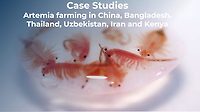
Case Studies: Artemia farming in China, Bangladesh, Thailand, Uzbekistan, Iran and Kenya

Presentation made at the Artemia Session held at the World Aquaculture 2026 conference in Singapore on 5 June 2026, including case studies from:

  • Artemia Production in Bohai Bay Solar Saltworks, China (Asian Regional Artemia Reference Center, Tianjin, China).
  • Artemia4Bangladesh Project (WorldFish).
  • Year-round Artemia biomass pond culture with integrated farming in Chachoengsao, Thailand (Bunjonk Farm).
  • Sustainable aquaculture in a changing landscape, Uzbekistan.
  • Artemia farming and natural production in Iran (Naser Agh).
  • Artemia farming in Kenya (Morine Mukami).

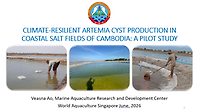
Climate-resilient Artemia cyst production in coastal salt fields of Cambodia: A pilot study

Presentation by Veasna Ao at the Artemia Session held at the World Aquaculture 2026 conference in Singapore on 5 June 2026.

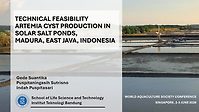
Technical feasibility of Artemia cyst production in solar salt ponds, Madura, East Java, Indonesia

Presentation by Gede Suantika, Puspitaningasih Sutrisno and Indah Puspitasari at the Artemia Session held at the World Aquaculture 2026 conference in Singapore on 5 June 2026.

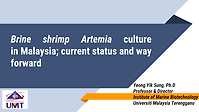
Brine shrimp Artemia culture in Malaysia: current status and way forward

Presentation by Yeong Yik Sung at the Artemia Session held at the World Aquaculture 2026 conference in Singapore on 5 June 2026.

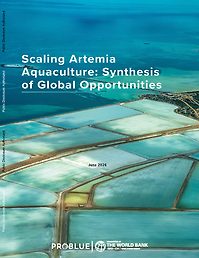
Scaling Artemia Aquaculture: Synthesis of Global Opportunities

This synthesis report consolidates over half a year’s worth of technical research, market analysis, and country level value chain assessments to present a comprehensive investment overview of the brine shrimp - Artemia - aquabusiness. Developed as part of the World Bank’s PROBLUE initiative on sustainable aquaculture and blue economy development, the report draws together the findings of six assessments, covering Artemia production systems, governance frameworks, markets and trade, emerging use cases, inventories of innovators, and in-depth country value chain studies.

The purpose of this synthesis report is to:

  • Provide an integrated overview of the current state and future potential of farmed Artemia systems.
  • Present investor-ready intelligence on country contexts, production models, and enabling conditions.
  • Guide strategic decision-making across public, private, and donor stakeholders through a concise but data-driven road map for investment and scale.

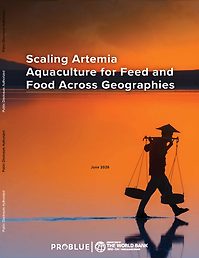
Scaling Artemia Aquaculture for Feed and Food Across Geographies

Artemia, commonly known as brine shrimp, is a critical live feed ingredient in aquaculture, particularly for shrimp and marine finfish hatcheries. The global Artemia industry is experiencing increasing demand driven by expanding aquaculture production. This report provides an in-depth analysis of Artemia in five key countries where Artemia aquaculture is established or in early stages of development — Viet Nam, China, Thailand, Bangladesh, and Kenya. The studies highlight Artemia value chains and associated production systems, market potential, and investment needs.

The findings confirm that Artemia can be successfully, profitably, and sustainably produced through aquaculture as cyst or biomass products in hypersaline environments, across diverse systems, providing important and critical products for aquaculture, with potential for wider application and product development as aquafeed and human food.

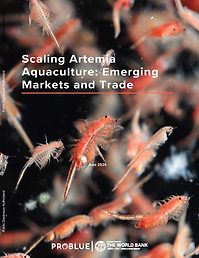
Scaling Artemia Aquaculture: Emerging Markets and Trade

This Global Artemia Emerging Markets and Trade report offers a comprehensive overview of Artemia products and markets, from global trends to country-level case studies. It provides an in-depth assessment of traditional and emerging uses, supply systems, investment opportunities, and strategic risks. The study is global in nature, with illustrative cases of ‘farmed’ Artemia in Bangladesh, China, Thailand, and Viet Nam in Asia and Kenya in Africa and how new farmed products can compete with wild Artemia products.

The report provides the quantitative foundation for the synthesis, linking the production and governance analyses with global trade, price, and investment trends. Together, six studies form a coherent analytical suite.

Bringing Fish Back to the Land the Water Left Behind

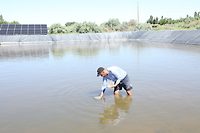
Artemia / snakehead farmer Ayapbergen Ajimuratov. Photo courtesy of UNDP Uzbekistan.

In Karakalpakstan, Uzbekistan, farmer Ayapbergen Ajimuratov is turning one of the region's most enduring problems into a livelihood. As the Aral Sea has shrunk over decades, it has left behind land saturated with saline water too salty to drink or irrigate crops with. Rather than treating it as waste, Ayapbergen has channelled it into six aquaculture ponds on a single hectare of land, becoming one of the first farmers in the district to cultivate Artemia and raise snakehead fish on a circular system where each stage feeds the next.

With support from a UNDP project backed by the Government of the Russian Federation, he received the ponds along with solar panels, a power transformer, a freezer for the harvest, and an on-site cabin. A community water purification system supplies around 1,500 cubic metres of saline water year-round. The farm is now producing fish and employing local workers - a small but meaningful step in rebuilding livelihoods in one of the world's most environmentally damaged regions.

Read the full story at the UNDP Uzbekistan website.

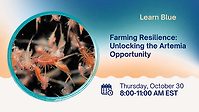
Unlocking the Artemia opportunity (webinar recording)

This webinar presented the results of an in-depth analysis of Artemia production, conservation and investment opportunities by the World Bank Group, with expert input from members of the International Artemia Consortium.

Artemia (brine shrimp) is a critical live feed in aquaculture, particularly in hatcheries for shrimp, fish, and ornamental species. Its production and sustainable management are increasingly important as aquaculture expands globally. Global Artemia markets face increasing demand, while new innovations in farming, processing, and conservation offer opportunities for inclusive investment, resilience, and biodiversity protection.

This event brought together global experts, policymakers, private sector representatives, and development partners to discuss the state of Artemia production and conservation, market opportunities, regulatory frameworks, and pathways for sustainable and viable investment.

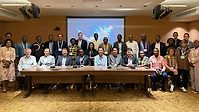
Global Artemia Summit held at WAS Safari 2025 in Entebbe

The Global Artemia Summit was held on 27 June 2025 in Entebbe, Uganda, as a special session during the World Aquaculture Society’s Safari Conference. Co-hosted by the World Bank and FutureFish, the event brought together experts, government officials, private sector stakeholders, and researchers to discuss strategies for enhancing Artemia aquaculture and conservation.

The summit addressed growing concerns over Artemia resource constraints due to overharvesting, environmental degradation, and climate impacts, while highlighting new opportunities for sustainable production, particularly in Africa. Sessions explored integrated Artemia-salt farming systems, human food applications, value chain development, and public-private investment models. Panel discussions and networking sessions promoted knowledge exchange and south-south collaboration.

Artemia production opportunities in Vietnam

Presentation made at the Global Artemia Summit, held 27 June in conjunction with WAS Safari 2025, Entebbe, Uganda. Presentation by Nguyen Van Hoa.

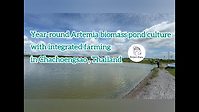
Year-round Artemia biomass pond culture with integrated farming in Chachoengsao, Thailand

Presentation made at the Global Artemia Summit, held 27 June in conjunction with WAS Safari 2025, Entebbe, Uganda. Presentation by Patipon Srianek for Bunjonk Farm.

Artemia production opportunities: Uzbekistan

Presentation made at the Global Artemia Summit, held 27 June in conjunction with WAS Safari 2025, Entebbe, Uganda. Presentation by Davletiyar Djiemuratov.

Artemia culture and hatchery development: Universiti Malaysia Terengganu

Presentation made at the Global Artemia Summit, held 27 June in conjunction with WAS Safari 2025, Entebbe, Uganda. Presentation by Yeong Yik Sung.

Development and utilization of Artemia resources in China

Presentation by Liying Sui at the First International Artemia Aquaculture Consortium Conference, 9 September 2024, Ostend, Belgium.