Video recordings of presentations from the Training project on management of Artemia resources and salt lake habitats are available. The project addressed the hydrological, biological, ecological, wildlife and legislative aspects of Artemia resource management, conservation and farming. Artemia species and strains need to be safeguarded and characterised for use in aquaculture. The ecological heterogeneity and dynamics of their salt lake habitats, influenced by climate change and human intervention, require an integrated and coordinated approach to their management and utilisation. The project was co-organised by FAO, NACA, IAAC and funded by Alliance of National and International Science Organizations, and the Belgian Royal Academy for Overseas Sciences.
12 November 2024 | Xinhua Yuan, Philippe De Maeyer, Simon Wilkinson, Wang Zhongxiu | 1706 views
Opening remarks at the Training Programme on Safeguarding Salt Lake Brine Shrimp (Artemia) Resources for Aquaculture, held 2-6 September 2024 in Rome / Brussels. Speakers were: Xinhua Yuan, Philippe De Maeyer, Simon Wilkinson, Wang Zhongxiu.
The first ever IAAC conference was a free half day even held in Ostend, Belgium on 9 September, as a prelude to Larvi 2024, which ran from 9-12 September. The conference featured twelve presentations introducing the IAAC and providing an overview of many of the issues surrounding Artemia, including management of salt lakes habitats that still provide the bulk of global Artemia supplies, Artemia biodiversity, hatching optimisation, and aquaculture of Artemia biomass in tanks and ponds. Video recordings of most will be posted shortly (the programme below will be updated with links).
The first IAAC Members’ Meeting was held in the afternoon following the IAAC Conference. The proceedings involved two panel discussions, by the Academic Sector and Private Sector respectively. The panels included remote members participating via Zoom.
The Training Programme on Safeguarding Salt Lake Brine Shrimp (Artemia) Resources for Aquaculture was held in Rome from 2-6 September. The course was attended by 37 participants from 15 countries. The programme was jointly organised by FAO, NACA / IAAC, and by RAOS and ANSO, which provided the financial support that made the activity possible. The programme featured a series of expert presentations on three themes: Salt lakes, management tools for Artemia cyst and biomass harvesting, and Artemia biodiversity. The full programme is appended below, and video recordings of most presentations will shortly be made available on NACA’s YouTube channel.
5 June 2024 | Van Stappen, G., Sorgeloos, P. & Rombaut, G. (eds.) | 4110 views
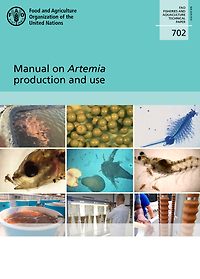
This FAO publication on brine shrimp is a manual for all those who are using Artemia or have an interest in this organism, whether as a source of live food in the hatchery, as a model organism in research, or for other purpose. It is intended for those who wish to update their knowledge on its biology, production or its use, but also for those who want to learn about Artemia for the first time. This manual presents in a concise form essential information on Artemia biology and the most important natural cyst resources that find their way to the aquaculture market. It also provides detailed information on general principles and practical procedures to produce Artemia in ponds and in tank systems. Finally, the manual offers a compilation of state-of-the-art guidelines and methodologies related to the use of this crucial live food organism in aquaculture.
The 8th fish and shellfish larviculture symposium (larvi '24) will be held in Ghent University, Belgium, from 9-12 September 2024. Capitalising on the previous “larvi” symposia (in ’91, ’95, ’01, ’05, ’09, ’13, ‘17), the Aquaculture R&D Consortium of Ghent University, the Norwegian University of Science and Technology and SINTEF Ocean have joined again in the organizing committee for “larvi’24” and are inviting the academic as well as the private sector to attend the 8th Fish and Shellfish Larviculture Symposium. Bringing together European and non-European stakeholders, once again the latest progress in academic research and in the production sector will be reviewed, problems identified and avenues for future collaboration explored. Please download the 2nd announcement and programme for further information.
The first International Artemia Aquaculture Consortium conference will also be held in conjuction with larvi '24, on 9 September. See you there!
From 11-13 July 2023, the first "Sustainable Development and Utilisation of Artemia Resources" training course was successfully held in Tianjin, China. The training course was organised by the Asian Regional Artemia Reference Center (ARARC), with the support of the Artemia Association of the China Aquatic Products Processing and Marketing Alliance.
The course contains theoretical, practical, and operational training on Artemia cyst processing and quality control, effective utilisation of Artemia as live food in hatcheries, and Artemia pond culture techniques, aiming to promote the sustainable exploration of Artemia resources and their application in larviculture. Nearly one hundred trainees from over thirty enterprises, institutes, and universities across the country participated in the training. The comprehensive coverage of the training course was well recognised by the trainees.
The first conference of the International Artemia Aquaculture Consortium will be organized on September 9, 2024 in Ostend, Belgium. The 8th International Fish & Shellfish Larviculture Symposium - Larvi ’24 - will be organised at the same venue in Ostend from 9-12 September 2024.
A more detailed first announcement with call for presentations will be mailed in the first week of October 2023. A preliminary website has been opened where you can register your interest to participate in this event.
Presentation by Simon Wilkinson, Network of Aquaculture Centres in Asia-Pacific, at the Seminar on Artemia Research and Production, 28 July 2023, Putrajaya, Malaysia.
19 June 2023 | Marine Stewardship Council | 1790 views
SALT LAKE CITY, May 15, 2023 – Utah’s Great Salt Lake brine shrimp fishery has officially achieved the Marine Stewardship Council's (MSC) sustainable wild fishery certification, making it the first inland fishery in the United States to earn this prestigious certification.
Brine shrimp (Artemia franciscana) are a small, shrimp-like crustacean that live in hypersaline lake environments and are a vital part of the lake's ecosystem, serving as a food source for numerous bird species and providing an important source of income for local fishermen.
The MSC certification process is rigorous and requires fisheries to meet strict standards for sustainable fishing practices, environmental impact, and management. The Great Salt Lake brine shrimp fishery underwent a thorough 8-month assessment by an independent, third-party certifier and was found to meet MSC's criteria for environmentally sustainability fishing practices.
29 December 2022 | Muhammad Meezanur Rahman, Nguyen Van Hoa and Patrick Sorgeloos | 1339 Downloads | .pdf | 2.35 MB
Brine shrimp Artemia nauplii constitute the most widely used live-food item for the larviculture of crustaceans and fish. The unique property of Artemia is its ability to to form dormant embryos or 'cysts'. The cysts are available year-round in large quantities along the shorelines of hypersaline lakes, coastal lagoons and solar salt works.
The aim of this manual is to provide technological guidelines to extension agents, researchers, and salt farmers on Artemia production in salt farms in Cox’s Bazar. The manual was prepared through review recent of activities in Artemia production, the 1996 FAO Manual on the production and use of live food for aquaculture, the 2019 book “ Principle of Artemia culture in solar salt works”, relevant books and published research papers. The manual covers Artemia biology and ecology, standard methods for incubation and stocking, pond management, feeding, health, harvesting and more.
29 December 2022 | Muhammad Meezanur Rahman and Patrick Sorgeloos (eds) | 2047 Downloads | .pdf | 674.27 KB
Artemia nauplii are an excellent live food for larviculture of crustaceans and marine fish due to their high digestible protein content, essential fatty acids and small in size. In many countries, hatchery workers lack sufficient knowledge and practices in the application of Artemia nauplii during larval rearing are not standardised. This has resulted in increased costs, disease incidence, and reduced survival in larval rearing.
This training manual on Artemia hatching and decapsulation provides guidance on optimising the use of Artemia nauplii in larval rearing. In addition, the standardised hatching procedure can be used to inoculate Artemia nauplii for culture in the salt farms of Bangladesh.
1 August 2022 | Simon Wilkinson and Patrick Sorgeloos | 2661 views
Introduction by Simon Wilkinson, Network of Aquaculture Centres in Asia-Pacific, and Patrick Sorgeloos, Artemia Reference Center, Belgium, at the Webinar on Management of Artemia Resources of the Great Salt Lake, Utah USA.
Presentation by Thomas Bosteels, Great Salt Lake Brine Shrimp Cooperative Inc., at the Webinar on Management of Artemia Resources of the Great Salt Lake, Utah USA.
Presentation by Thomas Bosteels, Great Salt Lake Brine Shrimp Cooperative Inc., at the Webinar on Management of Artemia Resources of the Great Salt Lake, Utah USA.