Stakeholders Validate New Good-Practice Materials for Artemia Use in Hatcheries
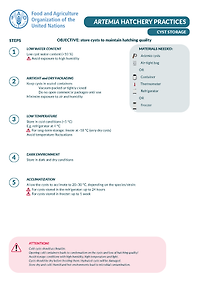
Update: The Fact sheets on good Artemia hatchery practices are now available for download.
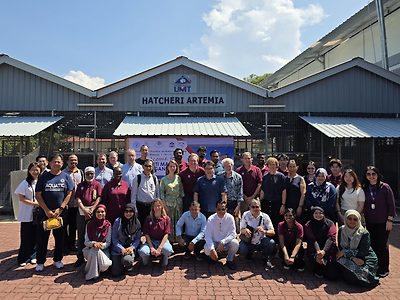
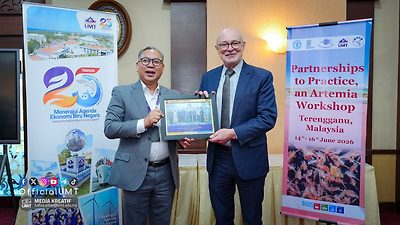
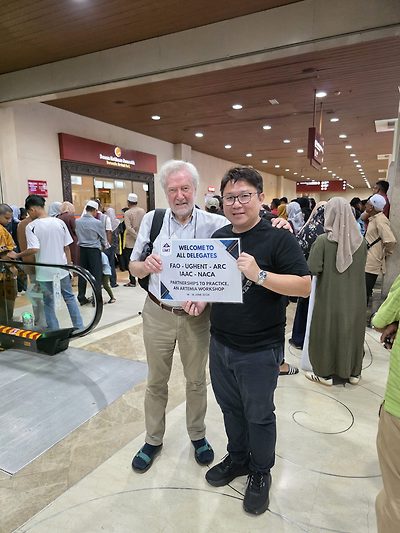
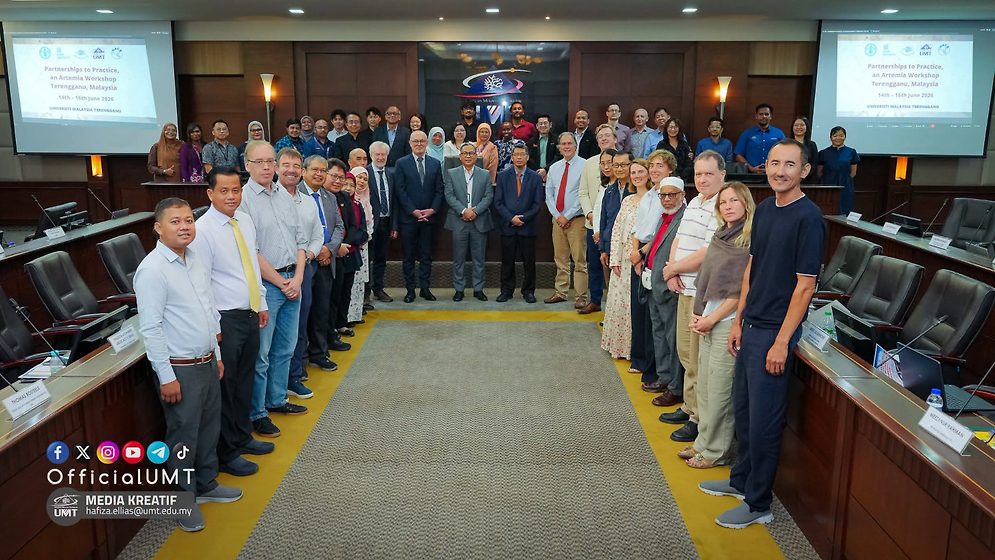
TERENGGANU, Malaysia — Researchers, industry representatives, and officials gathered at Universiti Malaysia Terengganu (UMT) from 14–16 June 2026 for Partnerships to Practice: An Artemia Workshop. Organised by the Food and Agriculture Organization (FAO) and the Artemia Reference Centre (Ghent University), in collaboration with the International Artemia Aquaculture Consortium (IAAC) and the Global Sustainable Aquaculture Advancement Partnership (GSAAP), the workshop had two objectives: first, to validate new fact sheets and videos illustrating good hatchery practices as an extension to the FAO Manual on Artemia Production and Use (2024); and second, to formulate strategic recommendations for future IAAC activities.
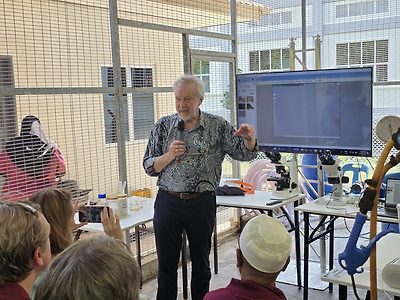
The workshop was officially opened by UMT Vice Chancellor Mohd. Zamri Bin Ibrahim, alongside opening remarks from His Excellency Peter Van Acker (Ambassador of Belgium to Malaysia) and Azahari Othman (Deputy Director-General of the Department of Fisheries, Malaysia). Dr. Alessandro Lovatelli, representing the FAO, welcomed the delegates, highlighting the collective effort needed to bridge the gap between academic research and commercial hatchery applications.
The organisers expressed their gratitude to FAO for its financial support to the Laboratory of Aquaculture and Artemia Reference Centre (Ghent University) in preparing the extension materials and organising the meeting. Special appreciation was also extended to UMT for hosting the event and managing local logistics, and to IAAC and the Network of Aquaculture Centres in Asia-Pacific (NACA) for their vital roles in facilitating the sessions.
Operationalising the FAO Artemia Manual: The hatchery "starter kit"
The main focus of the workshop was to review fact sheets and videos that translate the FAO Artemia Manual into practical guidance on Artemia production and use in hatcheries. The goals are to optimise yield and reduce wastage of expensive Artemia resources, and to provide instruction on cold storage, enrichment, and biosecurity. The workshop endorsed a multi-channel 'starter kit' approach for use by hatchery technicians, including:
- Standard Operating Procedure (SOP) Sheets: Step-by-step instructions for daily hatchery operations.
- Graphical Quick-Reference Sheets: Visually-oriented with diagrams for quick hatchery-floor consultation.
- Demonstration Videos: Short, clear videos demonstrating good practices.
- Checklists & Monitoring Records: Practical tools for tracking parameters, batch success, and troubleshooting.
Overcoming barriers to adoption
The workshop emphasised that successful adoption requires changing operational mindsets, not just supplying technical information — hatcheries must see tangible performance improvements, reinforced through repeated engagement and shared success stories. The endorsement of these materials by FAO and NACA was seen as a major strength, offering an independent, trusted reference for hatchery managers, distinct from commercially motivated recommendations.
Key barriers identified include diverse languages of hatchery staff, the need for repeated on-site training and follow-up, financial constraints, and resistance to altering established routines. In response, delegates proposed expanding future toolkits to include:
- Detailed Biosecurity Guidance: Protocols for minimising pathogen entry.
- Hatchery-Design Recommendations: Optimal layouts for Artemia preparation and feeding stations.
- Regional Production Benchmarks: More visual examples representing diverse geographic regions and production systems.
Participants agreed that success within one year would be reflected in adoption of the materials by hatcheries, their incorporation into training programmes and hatchery SOPs, translation into multiple languages, and measurable improvements in hatchery performance.
Options for global Artemia genetics & resource inventory
For hatcheries, choosing the right Artemia strain has direct consequences on hatching rates, size distribution, and nutritional value. The workshop discussed and broadly supported the potential establishment of a global inventory of Artemia resources and protocols for the harmonisation of genetic characterisation research.
If developed, such a database could capture information such as:
- Origin & species: Geographical sourcing and distribution.
- Genetic markers & phenotypic traits: Genetic identity, size, growth potential and environmental tolerances.
- Hatching & nutritional performance: Optimal hatching conditions and nutritional characteristics.
- Disease-related information: Documentation on regional biosecurity profiles.
By standardising these metrics, the industry could gain access to a transparent, reliable catalog of global strains while still preserving local knowledge and unique regional characteristics.
Strengthening networking and collaboration
Delegates underlined the importance of strengthening collaboration across the global Artemia community - through IAAC, existing regional networks, alumni networks, industry partnerships, national extension services, regional bodies, and FAO-linked activities. Priorities identified for future collaboration included mapping suitable locations for Artemia development, establishing and expanding Artemia resource inventories, improving information exchange among stakeholders, and building stronger links between research, industry, hatcheries, and government.
Prof. Anneliese Declercq noted that sustainable impact will require continued collaboration beyond the current project, with IAAC serving as one platform - among others that may be added - to connect expertise, support capacity building, and facilitate future regional and global Artemia initiatives.
Dissemination and translation strategy
To ensure the new resources reach remote hatcheries, delegates agreed that effective dissemination will require a mix of top-down and bottom-up channels: FAO, NACA, IAAC and GSAAP; national Departments of Fisheries; industry networks, feed companies and distributors; universities and technical institutions; social media and WhatsApp groups; and direct hatchery engagement through companies. ASEAN networks were singled out as especially valuable for regional uptake.
Multi-lingual access was also a key consideration, with the planned simultaneous publication of the fact sheets in the six official UN languages (English, French, Spanish, Russian, Chinese, Arabic). Workshop participants also volunteered to coordinate translations into Spanish, Russian, Chinese, Uzbek, Arabic, and French.
Particular emphasis was placed on integrating the materials into university curricula and technical training programmes, to reach both current practitioners and the next generation of hatchery managers.
Tour of the UMT Artemia Hatchery and Kembang Subur Hatchery
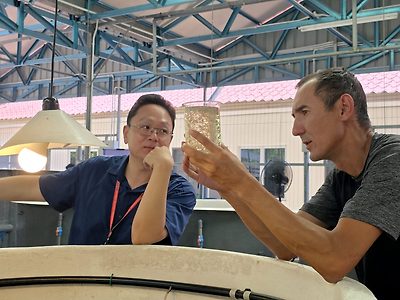
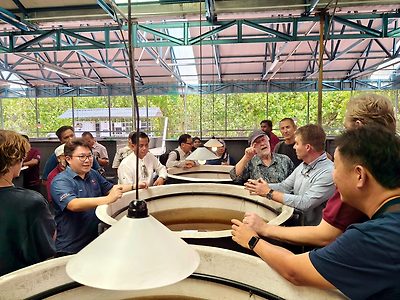
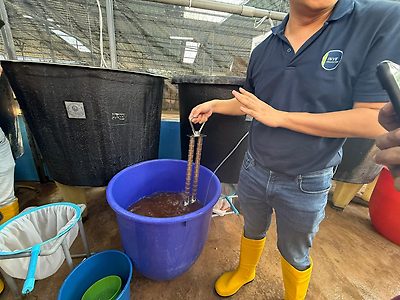
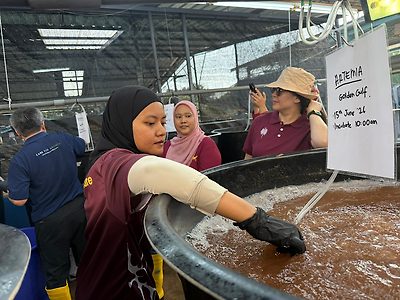
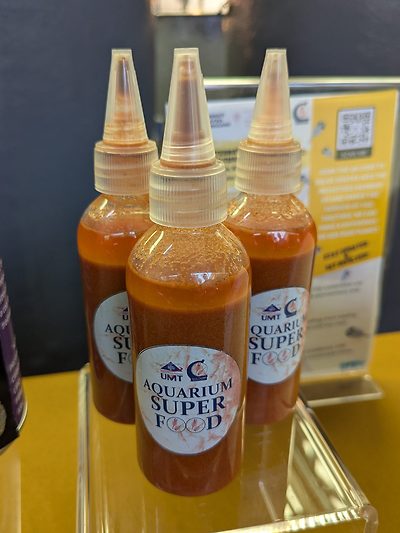
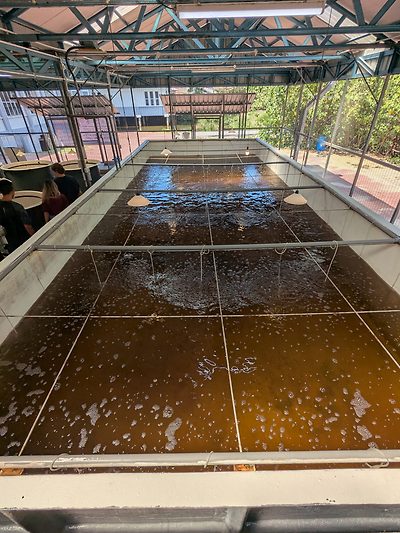
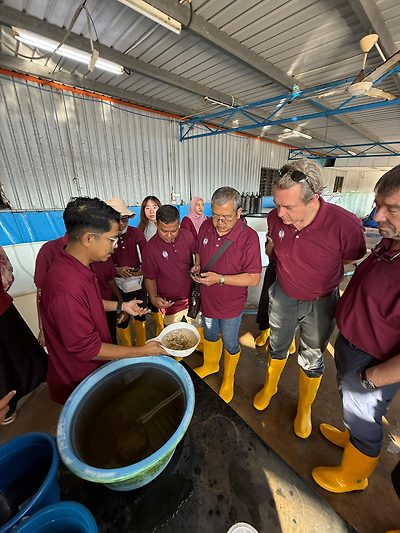
Participants observed local Artemia production techniques at local facilities. This included a view of sustainable biomass production at UMT's Artemia Hatchery facilitated by Prof. Dr. Yeong Yik Sung and staff of the Institute of Marine Biotechnology, where adult Artemia biomass is grown in tanks using local agricultural byproducts, principally palm kernel meal, a byproduct of the Malaysian palm oil industry. Participants also traveled to Kuantan, Pahang for a field visit and tour of the commercial Kembang Subur Hatchery, providing a view of how the newly developed SOPs and technical sheets perform under a different set of commercial operating conditions.
Creative Commons Attribution.
Related
Fact sheets on good Artemia hatchery practices
20 September 2026 | Food and Agriculture Organization of the United Nations | 1907 views | .zip | 14.68 MB
In this collection